Organizing A Day Of Service In Your Community

Recruiting volunteers is an ongoing process for most volunteer coordinators. You likely deal with groups that want to volunteer once as well as with people who want to volunteer on a regular basis.

Planning and participating in a day of service is a great way to help those interested in volunteering to learn about your organization and how they can help. Here is an example of one organization’s efforts to create a day of service.

Creating Projects For A Day Of Service

Some organizations such as businesses or churches may contact you looking for a short-term or one-day service project they can help you with. These types of projects may be difficult to plan depending on your organization, but they are a great way to find more permanent volunteers and to forge relationships with a group that is willing to come back to work with you on a regular basis.

Try to come up with project ideas that are portable, or that can be completed in their building, and that only take a few hours. Putting together kits or collecting donations are a great way to do this. Another option is a cleanup or renovation of your building.

Recruiting Volunteers

These opportunities are a great way to recruit more regular volunteers for your organization. At each service project you set up, provide contact information and explain the different ways that they can further serve your organization.

One example is if the group does clean up of a boys or girls club, you can tell them about the opportunities to work as a Big Brother or Big Sister or to volunteer as tutor at the center. You can also share stories about how your organization has helped people in the community. You are likely to receive a few regular volunteers from each of the service projects you set up.

Creating A Community Event

Instead of waiting for a group to contact you, your organization may work together with civic leaders and other nonprofit organizations in your community to set up a local day of service. You can contact local businesses and see if they would be willing to sponsor a service project, provide money to purchase supplies and give their employees the day off to volunteer.

If you have several different charities working on this together, you can advertise it across your community and create a great event. If you do this you will want to contact the civic organizations, the churches and the city council in your area to make this as widespread as possible. You can also contact your local schools to see if they would like to participate. Make sure to advertise the event several months in advance and to contact your regular volunteers so they can spread the word to their friends and coworkers.

Thanking Your Volunteers

It is always nice to thank the people who volunteered at the event. It may not be practical to hand write thank you notes for everyone who came, depending on the size of the event you hold.

As a nonprofit you may not have the means to provide refreshments or cold drinks for all your volunteers, but you may ask some of the groups who help organize the event if they would be willing to donate the water or refreshments for the event. Do take the time, however, to hand write a note for each person who participated in the planning and coordinating of each of the events.

Carlina Yepinski is the primary researcher and writer for networkmonitoring.org. Her most recent accomplishments include graduating from Kentucky State with a degree in communications and computer science. Her current focus for the site involves computer networks and network monitoring software.Tags:charles schwabcorporate nonprofit partnershipday of servicedays of servicevolunteer appreciationvolunteer engagementVolunteer recognitionvolunteer recruitment

This blog originally published on volunteermatch.org
Five Reasons Why Volunteering is the Most Rewarding Experience

Volunteering, over time, has transformed from leisure time community service into an effective tool in socially conscious professional networking. Whether you are a student, a newcomer to the town, or just a person looking for direction in your life, volunteering at a local non-profit organization is a fitting way to begin your pursuit. I have been volunteering at GiveTeens20® since March and during the course of time, I have come to know so many wonderful people who have given relevance to my search for a career fit (I am looking at you with gratitude, Kathy!). If you are on the wall about volunteering, this post might help you make the right decision. If you are already volunteering, it would help you reexamine your purpose at your non-profit organization. So why volunteer?

This article originally found on gt20.org

Know Your Community Better: As a recent transplant to the Bay Area, I have learned so much about communities and education from my short time at GT20. I learned of several thriving sub-communities around Fremont (Niles and Newark, for example) I was unaware of until a few months ago. As a part of an education-based non-profit, I also learned about the difficulties the schooling system in the bay faces and the measures that are being taken to address the shortcomings. I now have a different level of respect and appreciation for everything our teachers do to shape the students of our community.

Give Something Back to the Community: Did you know that as a volunteer, you have the power to strengthen so many aspects of your community? By working at the eldercare ward of your local hospital, you would be helping your community’s seniors. By taking up an after school mentoring program, you would be contributing towards the future of the youths. By taking that extra step, you would be contributing towards the development of your town, city and thus, the country!

Give Your Career Some Direction: It doesn’t matter whether you are fresh out of school or just taking a break to figure out a career change. Volunteering in a field that interests you and for an organization with a respectable cause significantly increase your chances of finding what lights you up! As a person who was fascinated by social media marketing, my time at GT20 has helped me research tools and ideas related to my field of interest. This has helped me make a considerable contribution towards improving GT20’s social media presence and improve the value of my resume. There really is nothing to beat the on-the-job knowledge volunteering offers!

Make Friends and Increase Your Network: If you take your volunteering seriously (well, not too seriously, of course!), it would improve your chances of networking with other professionals in your community. How, you ask me? Non-profits host or attend several events every month. Whether it is to raise funds or support other causes, an average non-profit organization sees at least one event a week. If you are an active member of your organization, you would get to attend several of these events and meet people from wide-ranging industries. In my opinion, there is nothing to beat that!

Finally, It is Good For You: Volunteering reduces stress. The shift in focus from your problems to something else would give a bigger and better meaning to your life. Nothing really beats that!!

Vaish is a Volunteer Social Media Strategist for GiveTeens20® and a Growth Hacking Consultant in the Technology industry. In her pass time, she likes to pretend she is reading just to get out of doing household chores!

4 Ways to Become a Leader in Your Community

We all love our communities, but even the best communities can use a little improvement now and then. What better way to bring new ideas to life than becoming a leader in your community and implementing them yourself? As a leader, you can motivate others and inspire the kind of change that turns into a revolution, similar to our friends at BMe Community. Not sure how to get started? We have a few ways that can help.

1. VISIBLY SUPPORT IMPORTANT CAUSES

One of the most vital steps you can take in becoming a community leader is to find causes you believe in and offer visible and vocal support for those causes. Sometimes, this means showing up for things like #BlackLivesMatter rallies or using social media to support movements like #TakeAKnee. Other times, it might mean helping individuals or groups hand out their fliers and newsletters.
Over time, people will see that you are willing to stand up for powerful causes. They will trust you as an authority over issues that matter and will be more likely to listen to you when you put forth your own causes and calls to action.

2. OFFER PRESENTATIONS TO SCHOOLS

We’ve all heard that “the children are our future” time and time again. That’s because they are! And children in our community need leaders who they can trust for wisdom and guidance.

You can provide that leadership by offering to give presentations to local schools and community colleges. There are plenty of options, including discussing figures of Black excellence during Black History Month, sharing the principles of Kwanzaa or discussing ways children can get involved in their community themselves.

It’s important for our children to see a person of color in a position of authority and power to show them that representation matters.
Beyond your actual presentation, your mere presence will help show our children that they, too, can become community leaders.

3. PROPOSE NEW POLICIES AND PROGRAMS

Every great community leader eventually runs into a large but important roadblock: major change involves major politics. To create long-term change, you can involve yourself in different levels of government and administration. This can range from attending school board meetings to possibly running for an elected office.

No matter your position within a power structure, you can propose new policies and programs that will not only benefit you, but help our community. And, you can make your position known: tell your church, friends, family, and other networks about what you have proposed and ask them to help spread the word.
The more you become trusted as a community leader, the more people will listen to what you have to say. And, the more followers you have, the greater influence you have, meaning the more likely it is that you can ensure that your proposed policies and programs become a reality.

4. BECOME A MENTOR

Over time, community leaders will often have many people who wish to learn from them. You can show the community exactly what you have to offer by becoming a mentor to a young person with great energy and aspiration.
Such a person can help to spread your ideas and induce public support for the ideas and actions you support. They will also serve as your representative, showing the community how your knowledge and energy has transformed someone’s life. When they see your power and prowess as a mentor, you’ll have even more people who wish to learn from you!

THE BOTTOM LINE

Becoming a community leader is one of the best ways that you can invest in yourself and our community. However, it’s a long journey, and it won’t always be easy. If you follow our easy steps, though, then every day will bring you one step closer to your goals!

This blog originally published on oneunited.com

Why Volunteer? Benefits of Community Service for Families with Special Needs

If I had a megaphone and 10 seconds to stand in front of every parent of a child with a disability to say one thing, it would be this:

Volunteer with your kids.

Huh? You may be thinking, “After years of experience, being a teacher/administrator/advocate, and getting your M.Ed you’re going to use that time to talk about volunteering?”

And I’m here to say: YES.

In my opinion, there are few opportunities that are as beneficial for kids than volunteering (side note: this is true for kids with and without special needs, but we’ll focus on those with disabilities for the purpose of this post).

Here’s why:

  • Volunteering builds job skills: Have you ever tried to convince a company to let your child shadow, or even work for free, so that they can gain skills? It’s like pulling teeth. Volunteering is the opposite– it’s a low-risk opportunity for your child to “try out” certain job skills in a safe environment where (most likely) everyone is learning. Some of my favorite volunteering-turned-job-skills opportunities are prepping and serving food at a shelter, organizing donations at a food pantry or resale store, packing gifts for Angel tree or adopt-a-child programs during the holidays, cleaning up local parks, sorting recycling from trash, and handing out programs at churches or for local theater events. All of these opportunities provide hands-on-learning for skills that students can transfer into a paid position some day.
  • Volunteering offers natural opportunities to build social skills: This one is pretty self-explanatory. Volunteering with a group (especially with other kids) is a one-of-a-kind opportunity to interact with people who you don’t know. This can be scary, yes, but it’s also a fantastic place to practice those “meeting new people” skills– shaking hands, making eye contact, introducing yourself, and making small talk. And the best part? You never have to see them again if you don’t want to!
  • Volunteering provides opportunities to build advocacy skills: Every time I volunteer somewhere new I feel totally out of my element. I don’t know where things are, or how to perform certain skills, or what I’m supposed to do when I’m done with one task and need another. This creates a perfect opportunity to practice asking for help and offering my strengths and disclosing my weaknesses (if asked for preferences between tasks). These are crucial skills for anybody, but are especially necessary in our kids with disabilities. Volunteering provides a low-risk training ground for strengthening this advocacy muscle.
  • Volunteering teaches kids that they’re not the only ones with needs: This is SO important. Sometimes our kids feel the burden of the therapies and the meetings and the appointments and the discussions. Sometimes they can feel like they’re broken or that it’s not fair that things are harder for them. Seeing others with needs normalizes and reduces the stigma, shame, and embarrassment that can come from being different. Volunteering opens the door for our children to realize that everyone has needs, and that everyone is capable of being helpful in one way or another. Which leads us to…
  • Volunteering allows other members in the community to view people with disabilities as contributors, rather than as solely “takers”: This is an indirect benefit to you, as a parent of a child with a disability, but it’s important nonetheless. Did you know that people with disabilities make up the largest minority group in the world? If it seems hard to believe, it’s because people with disabilities are not often visible– either because their disability itself doesn’t manifest physically, or because they are hidden at home, in separate schools, in sheltered workshops or in medical facilities. If we want to change the societal narrative about what people with disabilities can do, we have to show people. There’s something called “contact theory” which is as obvious at it sounds– the more contact you have with someone who’s different from you, the less anxiety, fear and negative thought patterns you have about that group as a whole. Volunteering benefits more than just your child and those being directly served. Volunteering shows that people with disabilities can contribute meaningfully to society.​

Have I got you convinced? You can find opportunities to volunteer at www.volunteermatch.com or at your local Hands-On Network. If you volunteer and it’s a hit, let us know! We’d love to share photos of you getting out in your community on our Facebook page!

This blog post originally published on iepguru.com

How to get involved with a volunteer fire department

Getting involved with a volunteer fire department is an incredibly rewarding way to make a positive contribution to your community. It is often a stepping stone to starting a career in a full-time fire department. 

That said, it’s not something that everyone can undertake. It takes a great deal physical stamina and mental strength to make this kind of commitment.

As a volunteer firefighter, you’ll be expected to: 

  • Keep a clear head in life-or-death situations.
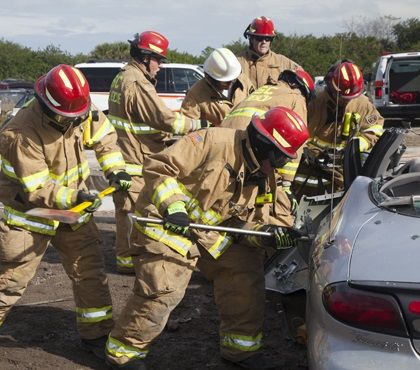
  • Maintain your composure when assisting traumatic events like auto crash injuries and fatalities. 
  • Put yourself in extreme situations, such as going into burning buildings, crawling through tight spaces and entering other hazardous environments.

Most volunteer fire departments want you to devote a minimum amount of time to service, so make sure you have time in your schedule and the flexibility to make that work. It also means that you must have the time to devote to the requisite firefighter training course. The length of the training can vary by state and the level of certification required — a Firefighter I certification may take six months of attending class two to three days per week.

You must also commit to staying in great physical condition to maintain the stamina to perform the necessary firefighting tasks. Eat right, exercise and reduce or eliminate habits that can adversely affect your health, like tobacco and alcohol use. Here are three specific steps to take to become a volunteer firefighter

STEP 1: CONTACT YOUR LOCAL VOLUNTEER FIRE DEPARTMENT


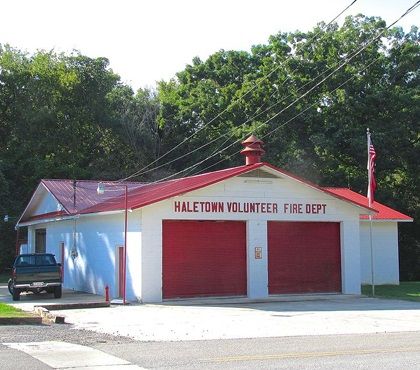
Taking a tour of your local volunteer fire department can give you a better idea of what it’s like to work there.(Photo/Wikimedia Commons)

The first step should always be to make sure that there is a need. During your call or visit, ask questions about the process so you understand what to expect as you become a volunteer firefighter. 

  • If there isn’t a volunteer fire station in your community, check out surrounding areas. 
  • Some fire departments do have residency restrictions, so ask about those in your call.
  • Call the non-emergency number and avoid tying up the fire dispatcher.
  • Many fire stations will welcome you to drop in if they’re not busy.
  • Some fire departments let you ride along with them, or tour their station to give you firsthand experience working in fire safety. 
  • They can also direct you to the proper authorities to help you get signed up.

STEP 2: APPLYING TO BE A VOLUNTEER FIREFIGHTER


Many volunteer fire departments will have you fill out an official application, along with background checks and physical tests. (Photo/Pixabay) 


Once you’ve found the right volunteer fire department, you’ll need to find out their requirements for service to see if you qualify. The standards vary widely, but they all have a minimum age requirement. You can expect:

  • A background check to see if you have anything in your history that would prevent you from becoming a volunteer firefighter.
  • Clearance by a doctor or a physical ability test, some fire departments require both. 
  • Fire departments controlled by a municipal government often require a full application process, usually including a drug test.

STEP 3: TRAINING TO BE A VOLUNTEER FIREFIGHTER


Every volunteer firefighter is required to take the 110-hour NFPA course. (Photo/Texas Hill Country)

If your application is approved, the next step in becoming a volunteer fireman or firewoman is to take the training course. The time requirement of these programs varies, but all firefighters must take a minimum 110-hour National Fire Protection Association-certified course.

Becoming a member of a volunteer fire stations is more than preparing to fight fire. Other functions and responsibilities that you can volunteer to help with at your local fire department include: 

  • Fundraising
  • Office work
  • Maintaining and cleaning equipment
  • Dispatching and washing vehicles

While this may not be as glamorous as fighting fires, all are an important part of running a volunteer fire department.

Many departments offer emergency medical services and encourage members to earn EMS certifications. Being an EMT prior to applying to the station will boost your odds of acceptance in many cases. 

Whatever capacity you choose to become involved in with your local volunteer fire department, it will most likely be one of the most rewarding experiences of your life.

About the author

Firefighting 101 articles are intended to educate a non-fire service audience about the fire service profession. These articles are written by FireRescue1 staff members and FireRescue1 contributors, and cover a wide range of topics from how to join a fire academy to how to pass the exams required to be a firefighter. If there’s a topic you’d like to see covered, or are interested in writing for Firefighting 101, email [email protected].